
Recurring Toilet Clogs in a Portland-Area Home: What's Actually Causing Them
If the same toilet clogs week after week, the plunger isn't the answer — the clog is a symptom, not the problem. Repeat clogs in one fixture usually point to one of four things: a partially blocked branch drain, a failing or low-flow toilet, a venting issue, or a restricted main sewer line. A camera inspection and a proper drain cleaning tell you which one, and that's what stops the cycle.
Here's how to think through it before you call, and what a licensed plumber will actually check.
Start by noticing *when* it clogs
The pattern matters more than the clog itself. Two homes with "a toilet that keeps clogging" often have completely different root causes.
- Clogs only in one toilet, other fixtures fine. Likely the toilet itself or the branch drain serving it.
- **Toilet clogs *and* a nearby tub or shower gurgles or backs up.** That points downstream — a shared line or the main sewer.
- Clogs get worse after laundry or a long shower. Added volume is exposing a partial blockage the toilet alone doesn't reveal.
- Clogs cleared easily, then returned within days. Something was pushed through, not removed. Residue is still coating the pipe.
- Slow flush plus bubbling in the bowl. Often a venting problem, not a blockage at all.
Write down what you've noticed. It genuinely shortens the diagnostic visit.
The four real causes of repeat toilet clogs
1. A partially blocked branch drain
Wipes (including ones labeled flushable), paper buildup, and mineral scale narrow the pipe. A plunger moves the blockage a few feet down. It catches again at the next bend. This is the single most common reason a clog "comes back."
2. The toilet itself
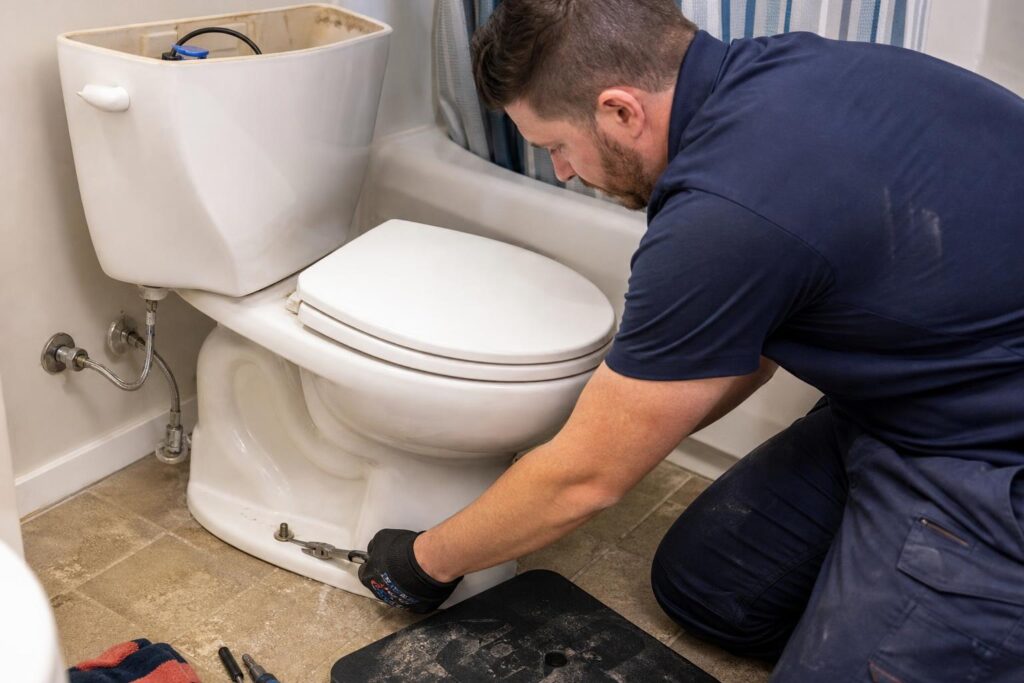
Older low-flow models and toilets with cracked or scaled internal trapways don't move waste with enough force. Mineral buildup inside the rim jets also weakens the flush over time. Sometimes the honest answer is that the fixture has reached the end of its service life, and toilet repair and installation is cheaper than another year of service calls.
3. A venting problem
Drains need air. A blocked or improperly installed vent creates suction that slows the flush and causes gurgling. This one gets misdiagnosed constantly, because it looks exactly like a clog.
4. The main sewer line
Root intrusion, a bellied section, a cracked clay pipe, or an offset joint will restrict flow for the whole house. The lowest fixture — often the first-floor toilet — shows symptoms first. In older Portland-area neighborhoods with mature trees and original sewer laterals, this is a real possibility, not a scare tactic.
How we actually diagnose it
The point of the visit is to stop guessing.
- Drain cleaning to clear the immediate blockage and restore flow.
- Sewer camera inspection to see the inside of the line — roots, cracks, bellies, buildup — instead of inferring it.
- Hydro jetting where the pipe walls are coated in grease, scale, or paper residue that cabling alone won't remove.
- Water pressure regulation check, since poor pressure affects fill and flush performance.
- Fixture evaluation, so you know whether repair or replacement is the better spend.
Snaking vs. hydro jetting — what's the difference?
Snaking (cabling) punches a hole through a blockage. Water flows again, and the line looks fixed. Hydro jetting uses pressurized water to scour the full diameter of the pipe, removing the buildup that caused the clog in the first place. If you've had the same drain cleared more than twice, jetting is usually the conversation worth having.
If it turns out to be the sewer line
You don't automatically dig up the yard. Depending on what the camera finds, options include targeted repair, trenchless repair, or full sewer line replacement. You see the footage, you get the pricing, and you decide. No work starts before you've approved a number.
What you get on every visit: clear scheduling confirmation, licensed and insured technicians, upfront flat-rate pricing before any work begins, clean job sites, and transparent communication.
While we're there: get the water heater checked
Cold weather is when water heaters fail — incoming water is colder, the tank works harder, and a unit that was marginal in August quits in November. If a plumber is already at your home for a drain or sewer visit, it's the cheapest possible time to have the water heater looked at.
Right now, qualifying water heater service is 5% off. That covers:
- Water heater repair and replacement
- Traditional tank water heaters
- Tankless water heater installation
- Gas line work connected to the installation
Signs worth mentioning while we're on site: rusty or discolored hot water, popping or rumbling from the tank, hot water running out faster than it used to, moisture around the base, or a unit past the 10-year mark.
Common follow-up questions
How soon can someone come out?
Same-day or next-day service is available in many cases, depending on availability and urgency. Office hours are Monday to Friday, 7:30 a.m. to 4:30 p.m., except holidays. Online service requests are usually answered within minutes during business hours. Emergency plumbing service is available across Portland metro communities for active backups and overflows.
Will I know the price before work starts?
Yes. You get upfront flat-rate pricing before any work begins — not an hourly meter running while someone diagnoses. Financing options may be available for qualifying projects; ask the team about approval requirements.
Is it worth replacing a toilet that clogs constantly?
Often, yes. If the camera shows a clear drain and clean sewer line, and the toilet still clogs, the fixture is the problem. A new toilet typically costs less than repeated emergency clearings over a couple of years.
Can I just keep using a drain chemical?
It's not a fix. Chemical cleaners can damage older pipes and do nothing about roots, bellies, or a worn fixture. They also make the eventual repair messier for whoever opens the line.
Book the visit
Get the clog diagnosed properly, and have the water heater checked while the truck is in the driveway — with 5% off qualifying water heater service.
Call (503) 821-4070 for Portland metro plumbing, or schedule a job estimate online and we'll confirm your appointment window.