
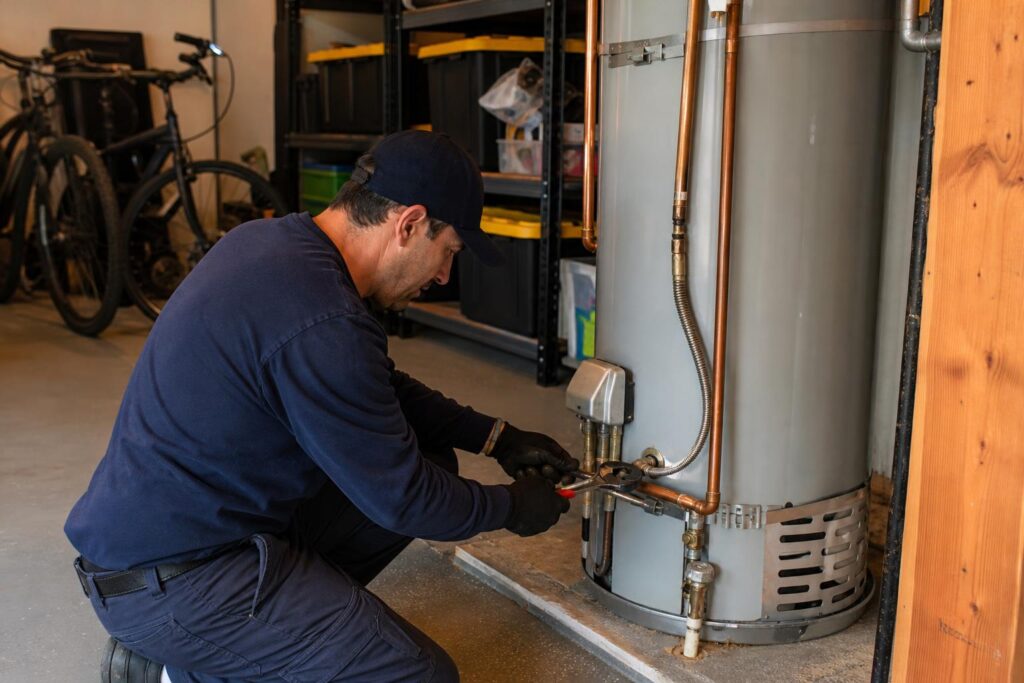
Veterans Day Plumbing and Water Heater Maintenance Checklist for Tacoma Homeowners
If you have Veterans Day off, spend an hour walking your home and checking four things: your water heater, your drains, your exposed pipes, and your outdoor spigots. Mid-November is the last comfortable stretch before Tacoma's cold, wet months put real pressure on your plumbing — and a small problem found on November 11 is far cheaper and calmer than a burst pipe or a cold shower in January.
Here's a practical, room-by-room checklist, plus how to tell the difference between a water heater that needs a repair and one that needs replacing.
Why Veterans Day Weekend Is Good Timing for This
Veterans Day is a day to honor the people who served. It's also one of the few fall weekdays many Tacoma households are home together, with daylight to spare and winter still a few weeks out.
That matters for plumbing. Most of the calls that feel like emergencies in December started as something small and ignorable in November — a slow drain, a faint drip, a water heater that took a little longer to recover. Looking now gives you time to schedule a repair on your terms instead of on a flooded floor's terms.
A note on hours: our office is open Monday to Friday, 7:30 a.m. to 4:30 p.m., except holidays. Veterans Day is a holiday — but Tacoma has 24/7 emergency plumbing response, so if something breaks that day, call (253) 533-9060.
Start With the Water Heater
Your water heater works hardest in winter. Incoming water is colder, showers run longer, and the tank has to do more to keep up. A unit that was "fine" in August can start showing its age fast.
Warning signs to look for
Go stand next to it and actually look. You're checking for:
- Rusty or discolored hot water at the tap — often a sign of corrosion inside the tank.
- Water pooling around the base or rust streaks running down the outside of the tank.
- Popping, rumbling or banging sounds during a heating cycle, which usually means sediment has settled at the bottom.
- Hot water that runs out faster than it used to, or takes noticeably longer to come back.
- Inconsistent temperature — scalding one minute, lukewarm the next.
- A pilot light that keeps going out, or a burner that won't stay lit on a gas unit.
- Dampness, moisture or a musty smell in the closet, garage corner or crawl space where the unit sits.
Any standing water under the tank is the one that shouldn't wait. A leaking tank rarely gets better on its own.
Simple maintenance you can do yourself
- Clear everything stored around the unit. Boxes, paint cans and laundry baskets block airflow and make leaks hard to spot.
- Check that the area is dry and that nothing is resting against the venting on a gas unit.
- Look at the temperature setting. Many homes run hotter than they need to.
- Test the hot water at a few different fixtures so you know what "normal" feels like before winter changes it.
Anything involving the pressure relief valve, the gas line, the anode rod or draining the tank is work for a licensed plumber. It's easy to make a small issue worse.
Repair or Replace? How to Decide
Repair usually makes sense when the tank itself is sound and the problem is a component — a thermostat, a heating element, a thermocouple, a valve. Replacement usually makes more sense when the tank is corroded, leaking from the body, or when repair costs are stacking up on an older unit.
Three questions that sort it out quickly:
1. Is water coming from the tank itself, or from a fitting? A leaking fitting is often a repair. A leaking tank body is not.
2. How many times have you called about this heater? A second or third repair on the same unit is usually a sign.
3. Does it still meet your household's needs? If you added a bathroom, a teenager, or a soaking tub, the issue may be capacity rather than failure.
We give upfront flat-rate pricing before any work begins, so you'll know the cost of the repair and the cost of the replacement before you choose between them. No guessing partway through.
Traditional tank or tankless?
Both are worth considering, and both are serviced and installed by our Washington plumbers.
- Traditional tank: stores a set volume of hot water. Simpler, familiar, and usually a faster swap when you need hot water back quickly.
- Tankless: heats water on demand, takes up less space, and doesn't store a tank of water that can eventually leak. Installation involves gas line and venting considerations, which is why it's worth getting a real assessment of your home rather than a general recommendation.
The right answer depends on your fuel type, where the unit sits, and how much hot water your household actually uses at once. That's a conversation, not a chart.
Drains and Sewer Lines Before the Rain Settles In
Tacoma's wet season puts extra load on sewer lines, especially on older properties and lots with mature trees. Fall is also when kitchen drains take the heaviest hit from holiday cooking.
Check for:
- Sinks or tubs draining slower than they did a month ago
- Gurgling sounds from a drain when another fixture runs
- A toilet that bubbles when the washing machine empties
- Recurring smells from a floor drain or crawl space
- Water backing up in the lowest fixture in the house
That last one — backup at the lowest drain — points at the main line rather than a single clog, and it's worth a call rather than a bottle of drain cleaner.
For buildup that keeps coming back, hydro jetting clears the line wall instead of just punching a hole through the blockage. For roots or breaks, a sewer inspection shows what's actually happening underground, and there are trenchless repair options as well as full sewer line replacement depending on what the camera finds.
Pipes, Leaks and the Cold-Weather Walkthrough
This is the part of the checklist that prevents the expensive January call.
- Disconnect garden hoses from outdoor spigots and shut off the supply to them if you have an interior valve.
- Check unheated spaces — garage, crawl space, under-sink cabinets on exterior walls — for exposed pipe that gets cold.
- Look under every sink with a flashlight. Feel the trap and supply lines for moisture.
- Watch your water meter with every fixture off. Movement means water is going somewhere.
- Check for signs you can't see directly: warm or damp spots on flooring, staining on a ceiling below a bathroom, or a water bill that jumped without explanation.
- Know where your main shutoff is — and make sure everyone in the house does too. If a pipe fails at 2 a.m., that knowledge is worth more than any tool in the garage.
Hidden leaks are exactly what leak detection is for. We find the source before anyone opens a wall, then handle the pipe repair or repiping from there.
Also worth a look while you're down there
If you have a sump pump, run it. If the crawl space is damp now, it will be wetter in a month. Sump pump repair and installation is part of what we do in Tacoma, and it's a much easier job in November than during a storm.
Can You Get a Plumber in Tacoma on Veterans Day?
Yes, for emergencies. Tacoma has 24/7 emergency plumbing response, including burst pipes, major water leaks, overflowing toilets and sewer backups. Our office is closed on holidays, but the emergency line at (253) 533-9060 is the right number for anything that can't wait.
For non-urgent work — a water heater replacement, a drain cleaning, a fixture swap — same-day or next-day service is often available depending on schedule and urgency. Booking right after the holiday is usually the smoothest path.
What Service Actually Looks Like
No surprises is the whole point:
- Licensed and insured Washington State plumbers
- Upfront flat-rate pricing before any work starts
- Clear scheduling confirmation so you know when we're coming
- Clean job sites and transparent communication throughout
- Gas line work that meets Washington State plumbing and safety codes
We serve North Tacoma, South Tacoma, Downtown Tacoma, the Proctor District, University Place, Lakewood, Fircrest, Spanaway and Parkland.
One thing to know: heating and cooling services are available only in Central Oregon. In Tacoma and the rest of Washington, we handle plumbing.
Your Next Step
Work through the checklist this Veterans Day. If anything on it gave you pause — a sound from the water heater, a slow drain, a damp spot under a sink — get it looked at before the cold settles in.
Call us today at (253) 533-9060, or use our schedule a job or request an estimate page. We aim to respond to online requests quickly — often within minutes during business hours.