
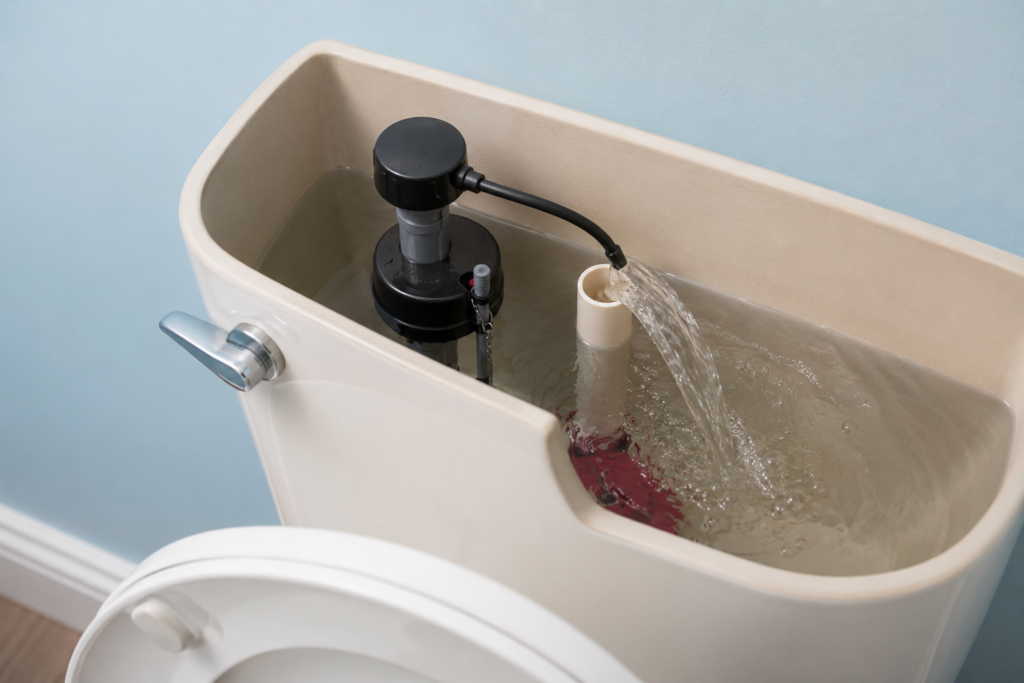
A running toilet might seem like a minor annoyance, but that constant sound of water flowing can be a sign of a larger plumbing issue. Even worse, a toilet that won’t stop running can waste hundreds of gallons of water each day, leading to higher utility bills and unnecessary strain on your plumbing system.
If you’ve noticed your toilet continuing to run long after flushing, here’s what it could mean and why it’s important to address the problem sooner rather than later.
What Causes a Running Toilet?
Most running toilet issues originate inside the tank. Several components work together to control the flow of water, and when one fails, water can continue flowing endlessly.
1. Worn or Damaged Flapper
The flapper is a rubber seal at the bottom of the tank that lifts when you flush and closes afterward. Over time, the flapper can become worn, cracked, or warped.
When this happens, water slowly leaks from the tank into the bowl, causing the fill valve to continuously refill the tank.
Signs of a bad flapper:
- Toilet runs intermittently throughout the day
- You hear the tank refilling when no one has flushed
- Food coloring placed in the tank appears in the bowl without flushing
2. Faulty Fill Valve
The fill valve controls how much water enters the tank after each flush. If it becomes damaged or improperly adjusted, it may continue supplying water even when the tank is full.
Common symptoms include:
- Constant hissing sounds
- Water flowing into the overflow tube
- Tank taking longer than normal to fill
3. Float Problems
The float tells the fill valve when to stop filling the tank. If the float is set too high, water will continue flowing into the overflow tube, causing the toilet to run continuously.
In some cases, the float can become stuck due to mineral buildup or wear.
4. Overflow Tube Issues
The overflow tube prevents the tank from overfilling. If water levels rise above the proper level, excess water drains into the tube and into the bowl.
When water constantly enters the overflow tube, it usually indicates:
- A misadjusted float
- A failing fill valve
- Excessive water pressure affecting tank operation
5. Mineral Buildup and Aging Components
In areas with hard water, mineral deposits can accumulate inside toilet components. These deposits can interfere with moving parts and prevent valves from sealing properly.
Older toilets are especially susceptible to wear and buildup that leads to persistent running.
Why You Shouldn’t Ignore a Running Toilet
Many homeowners postpone toilet repairs because the fixture still appears to function. However, a running toilet can create several costly problems.
Higher Water Bills
A toilet that continuously runs can waste anywhere from 200 to over 1,000 gallons of water per day depending on the severity of the leak.
That wasted water quickly adds up on your monthly utility bill.
Increased Wear on Plumbing Components
Constant operation puts unnecessary strain on internal toilet parts. What begins as a simple flapper replacement could eventually lead to additional repairs if left unaddressed.
Potential Water Damage
While less common, malfunctioning toilet components can sometimes contribute to overflows or leaks that damage flooring and surrounding materials.
Environmental Impact
Wasting clean, treated water isn’t just expensive—it also places additional demand on local water resources.
Can You Fix a Running Toilet Yourself?
Some running toilet issues are relatively simple to diagnose and repair, particularly if the problem involves a worn flapper or an incorrectly adjusted float.
However, if:
- The toilet continues running after adjustments
- Parts are corroded or difficult to access
- You notice leaks around the base of the toilet
- The issue keeps returning
It may be time to have a professional plumber inspect the fixture and identify the root cause.
When to Call a Professional Plumber
If you’ve tried basic troubleshooting and your toilet is still running, professional diagnosis can save time, frustration, and water.
A licensed plumber can:
- Identify hidden issues inside the tank
- Replace worn components correctly
- Check for additional plumbing concerns
- Recommend upgrades if the toilet is nearing the end of its lifespan
Stop Wasting Water and Money
A running toilet is more than just a nuisance—it can significantly increase your water bill and indicate that parts inside the tank are wearing out. Addressing the problem early can prevent larger repairs and keep your plumbing system operating efficiently.
If your toilet won’t stop running, the experienced team at Einstein Pros Plumbing is here to help. We’ll quickly diagnose the issue, provide upfront recommendations, and get your bathroom back to normal.
Don’t let a small plumbing issue turn into a costly problem. Contact Einstein Pros Plumbing today for fast, professional toilet repair services. 🚽🔧