
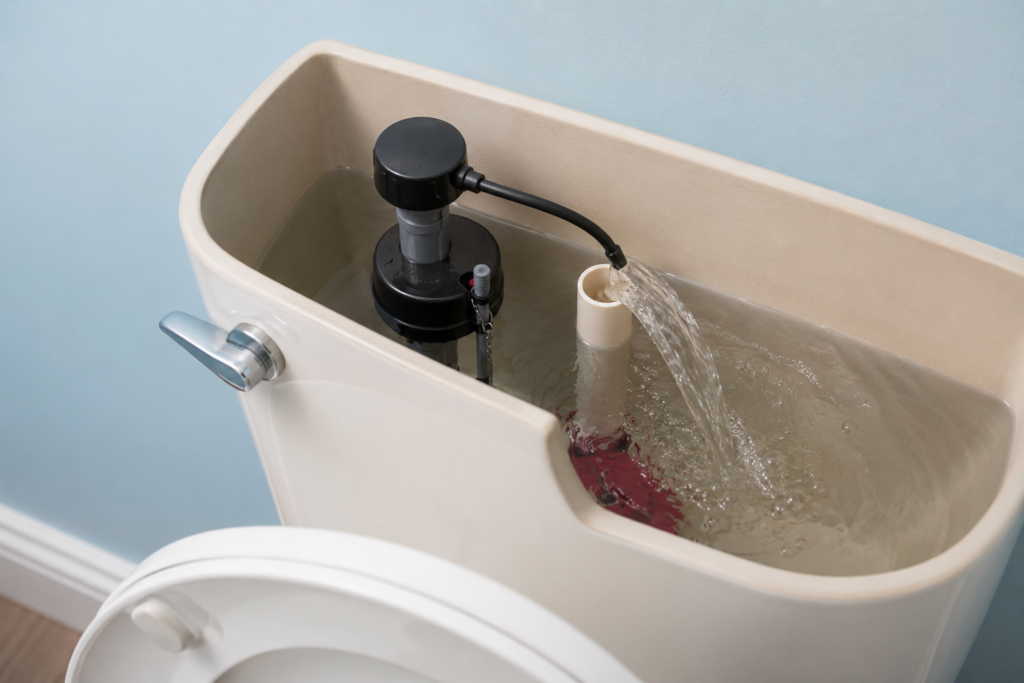
A running toilet might seem like a minor annoyance, but it can quietly waste thousands of gallons of water and significantly increase your monthly utility bill. Many homeowners ignore the sound because the toilet still appears to be working, but that constant trickle of water is often a sign that something inside the tank needs attention.
How Does a Toilet Keep Running?
A toilet runs when water continuously flows from the tank into the bowl instead of stopping after a flush. This is usually caused by a worn or damaged component inside the tank, such as:
- A deteriorated flapper that no longer creates a proper seal
- A faulty fill valve that won’t shut off
- A float set too high
- A loose or tangled chain connected to the flapper
- Mineral buildup preventing parts from working correctly
While these problems may seem small, they can waste an incredible amount of water over time.
How Much Water Is Being Wasted?
The amount depends on how severe the leak is, but even a slow-running toilet can waste a surprising amount of water.
Estimated water waste:
| Leak Severity | Water Wasted Per Day | Water Wasted Per Month |
|---|---|---|
| Small leak | 30–100 gallons | 900–3,000 gallons |
| Moderate leak | 100–250 gallons | 3,000–7,500 gallons |
| Heavy running toilet | 200–500+ gallons | 6,000–15,000+ gallons |
To put that into perspective, a heavily running toilet can waste enough water in one month to fill a backyard swimming pool.
Signs Your Toilet Is Running
Sometimes the problem is obvious, but other times it’s nearly silent. Watch for these warning signs:
- You hear water running long after flushing.
- The toilet refills even when no one has used it.
- The water bill suddenly increases.
- You hear the fill valve turn on randomly.
- Ripples appear in the toilet bowl when it hasn’t been flushed.
A Simple Dye Test
One easy way to check for a hidden leak is with a dye test.
- Remove the toilet tank lid.
- Add a few drops of food coloring or a toilet leak detection tablet to the tank.
- Wait about 15–20 minutes without flushing.
- If colored water appears in the bowl, the toilet is leaking.
This simple test can help catch leaks before they become expensive.
Why You Should Fix It Quickly
Ignoring a running toilet can lead to more than just a higher water bill. Continuous water flow can:
- Increase utility costs every month
- Wear out toilet components faster
- Waste thousands of gallons of clean drinking water
- Indicate additional plumbing issues developing inside the fixture
The sooner the problem is repaired, the less water—and money—you’ll waste.
Can You Fix It Yourself?
Some running toilets only need a new flapper or a minor adjustment, making them an easy DIY repair. However, if replacing the common parts doesn’t solve the issue, or if the toilet continues running intermittently, it’s best to have a professional inspect it. There may be hidden problems with the fill valve, overflow tube, or other internal components.
Prevent Future Problems
A little maintenance goes a long way. To keep your toilet operating efficiently:
- Check inside the tank every few months.
- Replace worn rubber flappers before they fail.
- Clean away mineral buildup.
- Watch for unexplained increases in your water bill.
- Address small plumbing issues before they become costly repairs.
We’re Here to Help
A running toilet may seem like a small inconvenience, but over time it can waste thousands of gallons of water and cost far more than a simple repair. If your toilet won’t stop running, don’t wait until your next water bill arrives.
The experienced plumbers at Einstein Pros can quickly diagnose the problem, make the necessary repairs, and help keep your home’s plumbing running efficiently. Contact us today to schedule a toilet inspection or repair and stop wasting water before it adds up.