
Small Faucet and Under-Sink Leaks: Why the Slow Drip Under Your Cabinet Needs Fixing Now
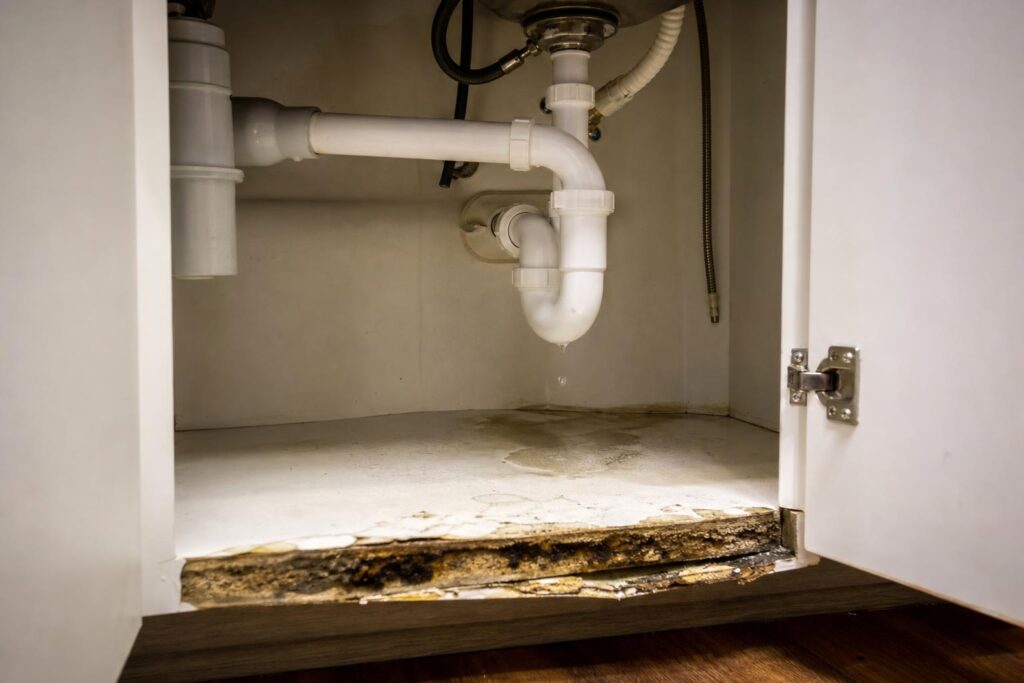
A small under-sink leak is worth fixing right away. Even a slow drip runs constantly, and the real cost usually isn't the wasted water — it's the swollen cabinet base, the soft subfloor, and the mold growing in a dark space nobody opens more than once a week. Most of these repairs are small, straightforward jobs when caught early, and Einstein Pros handles them across Oregon and Washington with upfront flat-rate pricing quoted before any work starts.
This Labor Day, we're thinking about the people who do the physical work — the plumbers, electricians, and technicians who crawl under houses so you don't have to. A good way to honor that work? Stop putting off the small stuff. The leak under your sink is the perfect place to start.
Why a "Minor" Leak Doesn't Stay Minor
A drip is a symptom, not the problem. Something has failed — a seal, a washer, a threaded connection, a cracked plastic nut — and failures like that get worse, not better.
Here's what a slow, ignored leak actually does inside a cabinet:
- Soaks the cabinet base. Particleboard and MDF swell, delaminate, and never go back. Replacing a sink base cabinet costs far more than the plumbing repair would have.
- Wicks into the subfloor. Water travels sideways along the floor deck. By the time you feel a soft spot, the damage has spread well past the sink.
- Feeds mold and mildew. A closed cabinet with constant moisture and no airflow is close to ideal conditions for growth.
- Runs up the water bill quietly. A drip that never stops is water you're paying for around the clock.
- Hides the real issue. A puddle under the sink can come from the faucet, the drain, the supply line, or the disposal. Wiping it up doesn't tell you which.
There's also the pressurized-side risk. A drip at a supply line connection means that connection is already failing. Supply lines don't always fail politely — a braided line that lets go while you're at work floods the kitchen, not the cabinet.
Where Under-Sink Leaks Actually Come From
Under a typical kitchen or bathroom sink, there are only a handful of usual suspects. Knowing them helps you describe the problem accurately when you call.
Faucet body and cartridge
If water pools around the base of the faucet on the countertop, or drips from the spout with the handle off, the issue is inside the faucet — worn cartridge, seals, or O-rings. Countertop water often runs backward through the mounting holes and shows up under the sink, which is why people misdiagnose this as a drain leak.
Supply lines and shutoff valves
The two flexible lines feeding hot and cold water are always under pressure. Leaks show up at the connection nut, at the valve, or as a bead of moisture on the line itself. Old multi-turn shutoff valves are a common failure point — they often start weeping from the packing nut, especially after being turned for the first time in years.
P-trap and drain assembly
The curved pipe under the sink only holds water when you're draining. So a P-trap leak drips *while you use the sink* and stops afterward. Slip nuts loosen, washers harden, and plastic threads crack if they've been overtightened.
Sink flange and basket strainer
Where the drain meets the sink basin, the putty or gasket eventually fails. Water sheets down the outside of the drain pipe instead of dripping from a joint — a good clue you're looking at the flange, not the trap.
Garbage disposal
Disposals leak at the mounting flange, at the dishwasher inlet, or from the body itself. A leak from the bottom seam of the disposal usually means internal seal failure, and that unit needs replacement rather than repair.
A Five-Minute Check You Can Do Today
Before you call, this narrows things down fast:
1. Empty the cabinet and dry everything. Wipe every pipe, valve, and the cabinet floor completely.
2. Lay down dry paper towel across the cabinet base and under each connection.
3. Wait an hour without using the sink. Any new wet spot means a pressurized leak — supply line, valve, or faucet body.
4. Now run water hard for two minutes and fill and drain the basin. New wetness now points to the drain side — trap, flange, or disposal.
5. Run your fingers along the top of the horizontal drain pipe. Water travels; the wet spot on the floor is rarely under the actual failure point.
6. Check the cabinet floor with your hand. Dark staining, a chalky ring, or a spongy surface means this has been going on a while.
If you find water and can't stop it, close the shutoff valves under the sink. If those valves won't turn or leak when you try, leave them and shut off the main.
When the Leak Isn't Under the Sink at All
Sometimes there's no visible drip and something is still wrong. Signs worth taking seriously:
- A water bill that climbed without a change in household habits
- Water pressure that dropped for no clear reason
- A musty smell in one specific room or cabinet
- Warm or discolored patches on a floor or wall
- The sound of running water when every fixture is off
Those point to a leak inside a wall, under a slab, or in a supply line you can't see. That's what professional leak detection is for — locating the failure without tearing open finished surfaces to go looking. From there the fix might be a targeted pipe repair, or, if the piping throughout the home is failing in multiple places, whole-home repiping.
What a Leak Repair Visit With Einstein Pros Looks Like
We keep this simple and predictable.
- A licensed and insured technician diagnoses the actual source instead of guessing from the puddle.
- You get upfront flat-rate pricing before any work begins — you approve the number first.
- Repairs are completed to code.
- We protect the space and leave a clean job site.
- You get clear scheduling confirmation and straight answers, not a vague window and a shrug.
What to expect on every call: clear scheduling confirmation, licensed and insured technicians, upfront flat-rate pricing, respectful and professional service, clean job sites, and transparent communication.
Same-day or next-day service is available in many cases, depending on availability and urgency. Online service requests are typically answered quickly — often within minutes during business hours.
Common Questions About Small Leaks
Is a dripping faucet a plumbing emergency?
Usually not. A dripping spout can wait for a scheduled visit. What can't wait: water you can't shut off, a leak that's actively soaking drywall or flooring, or a supply line that's spraying rather than dripping. For those, call the emergency line for your area. Emergency plumbing is available throughout Central Oregon, Portland, and Washington communities including Vancouver, Tacoma, Seattle, Belfair, and Silverdale, with 24/7 emergency response in Bend, Tacoma, and Puyallup.
Should I repair the faucet or replace it?
It depends on the faucet's age and condition. A newer faucet with a worn cartridge is a straightforward repair. An older fixture that's leaking from the body, has corroded internals, or where parts are no longer available is usually better replaced. Our technician will tell you which situation you're in and price both paths where both are realistic — faucet repair and fixture replacement are both services we handle.
Why does the leak only appear sometimes?
Because the drain side of your plumbing only holds water when it's in use. Intermittent leaks that show up after dishes or a long hand-wash are almost always drain-side — trap, flange, or disposal connection. Constant seepage is pressurized-side.
Can I just tighten the nut myself?
Sometimes a hand-snug slip nut solves it. Often it doesn't, and overtightening cracks plastic threads or crushes a washer, turning a drip into a stream. If a gentle quarter-turn doesn't fix it, stop there.
Does one leak mean my whole plumbing system is failing?
Not necessarily. But repeated leaks at different fixtures, discolored water, or pinhole leaks in supply piping are a pattern worth investigating. That's a conversation about pipe condition, not just a single repair.
5% Off Plumbing Repairs
Right now, Einstein Pros is taking 5% off plumbing repairs — including the small ones you've been meaning to deal with. Faucet leaks, under-sink drips, running toilets, slow drains, leaking supply lines.
Where We Work
Plumbing service is available across:
- Central Oregon: Bend, Redmond, Sisters, Sunriver, La Pine, Prineville, and Madras — (541) 420-8888
- Oregon Metro: Portland, Beaverton, Hillsboro, Tigard, Tualatin, Lake Oswego, Gresham, Salem, and Albany — Portland (503) 821-4070, Salem (503) 837-8470
- Washington: Vancouver, Tacoma, Seattle, Belfair, Silverdale, Bremerton, Port Orchard, Puyallup, and Olympia — Vancouver (360) 768-3030, Tacoma (253) 533-9060
We serve homeowners, property managers, and light commercial buildings. Office hours are Monday to Friday, 7:30 a.m. to 4:30 p.m., except holidays. Toll-free: (888) 671-7767.
Fix the Drip This Week
Got a plumbing problem you've been putting off? Get it handled while it's still a small repair. Head to our schedule a job estimate page to request service online, or call the number for your area and talk to a licensed pro today.