
How to Prevent Grease Clogs in Your Kitchen Drain in Beaverton
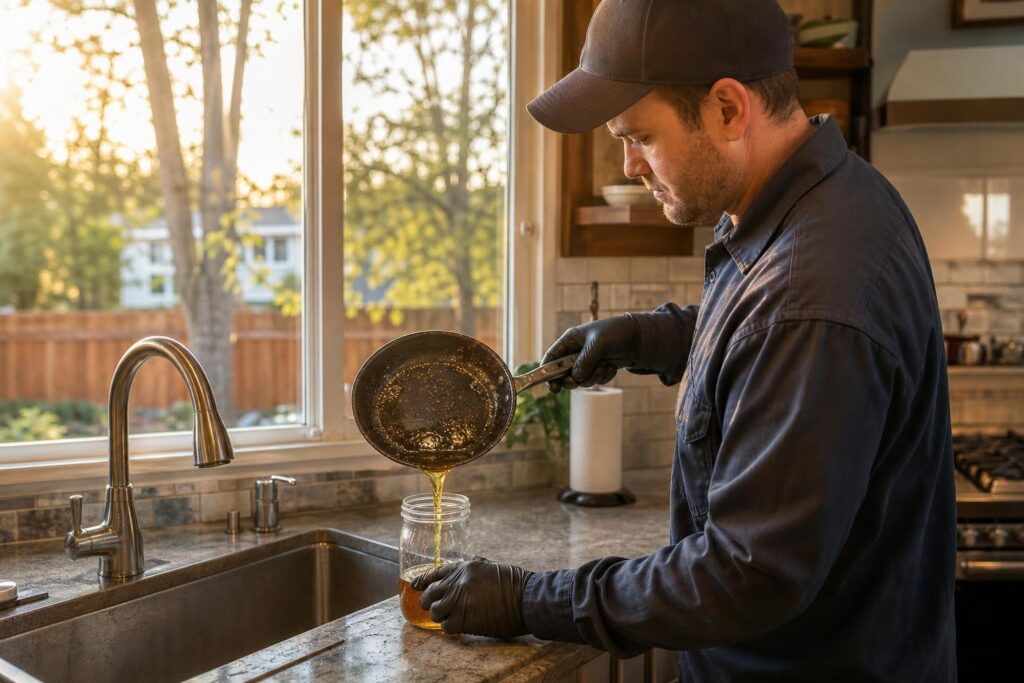
The most reliable way to prevent a grease clog is to keep grease out of the drain entirely: pour cooled cooking fat into a can or jar, wipe greasy pans with a paper towel before rinsing, and never rely on hot water to "flush it through." Grease that leaves your sink as a warm liquid cools inside the pipe within a few feet and hardens on the pipe wall. Do that a few hundred times — which is a normal year of cooking — and the drain line narrows until it stops.
That's the short answer. Here's what's actually happening in your pipes, how to spot the problem before it backs up into your sink, and when it's time to bring in a licensed plumber.
Why grease clogs happen faster than homeowners expect
Grease, oils and fats go down the drain as a liquid. They don't stay that way.
Your kitchen drain line sits inside a cold wall or under a cold floor. Warm bacon fat hits that cold pipe, loses heat in seconds, and sticks. The next greasy rinse sticks to that layer. Over months, the buildup collects coffee grounds, rice, eggshell fragments and soap scum, turning into a dense sleeve that chokes the pipe down to a fraction of its original diameter.
A few things make this worse in Beaverton homes:
- Cold-weather plumbing. Cooler months mean colder pipe walls, which means grease solidifies faster and closer to the sink.
- Older housing stock. Older kitchen drain lines are often smaller and rougher inside, so buildup grabs hold more easily.
- Long horizontal runs. Remodeled kitchens and island sinks often have long horizontal drain runs with little slope — ideal places for grease to settle.
- Shared sewer lines. Grease that makes it past your kitchen drain doesn't vanish. It collects further down the sewer line, where a clog is far more expensive to fix.
The grease prevention habits that actually work
None of these are complicated. They just have to be consistent.
In the kitchen
- Pour cooled grease, bacon fat, frying oil and pan drippings into an empty can, jar or lidded container. Once it solidifies, throw it in the trash.
- Wipe greasy pans, plates and baking sheets with a paper towel before they hit the sink.
- Scrape food scraps into the trash or compost instead of pushing them down the drain.
- Use a mesh sink strainer in every kitchen basin and empty it after each meal.
- Keep dairy out of the drain too. Butter, cream, cheese, salad dressing and gravy all behave like grease once they cool.
- Run cold water when you use the garbage disposal, not hot. Cold water keeps any fat present firmer so it moves through instead of coating the pipe.
Around holidays and big meals
Thanksgiving and holiday cooking produce more fat in two days than a normal month. Before a big cook, set out a dedicated grease container and a roll of paper towels next to the stove. It's a two-minute setup that prevents the single most common post-holiday service call.
A sensible maintenance rhythm
- Weekly: run hot water with a bit of dish soap down the kitchen drain to clear light residue from the trap area.
- Monthly: pour a kettle of hot (not boiling) water slowly down the drain.
- Annually: consider a professional drain cleaning if your kitchen line has a history of slowing down.
Hot water and soap help with *fresh, light* residue near the trap. They do not dissolve an established grease sleeve twenty feet down the line. Be realistic about what they can do.
What doesn't work (and what can make it worse)
Chemical drain cleaners. They generate heat and may punch a narrow channel through soft blockage, but they rarely remove the grease layer. They also sit in the pipe when the drain is fully blocked, and they're hard on older pipes and on whoever has to open that line afterward.
Boiling water as a cure. Boiling water can soften grease and move it a few feet downstream, where it cools and hardens again — usually in a harder spot to reach. It can also damage PVC joints and crack porcelain.
"My garbage disposal handles grease." It doesn't. A disposal grinds solids. It has no effect on fat, which reassembles into a coating on the other side of the unit. A disposal running poorly is often a symptom of a greasy, partially blocked drain line, not the cause.
Treating the symptom repeatedly. If the same sink slows down every few months, the pipe isn't the problem — the buildup inside it is. Plunging it each time just restores the narrow channel through the middle of the grease.
Warning signs you already have grease buildup
Catch these early and you're looking at a straightforward drain cleaning instead of a sewer repair.
- The kitchen sink drains slower than it did six months ago.
- Water gurgles in the sink or disposal when the dishwasher drains.
- A persistent sour or musty smell from the drain, even after cleaning the basin.
- The sink backs up when the dishwasher runs, then clears slowly.
- Standing water in the dishwasher at the end of a cycle.
- More than one fixture slowing down at the same time — this often points past the kitchen line toward the main sewer line.
That last one matters. A single slow sink is usually local. Multiple slow fixtures, or a backup in a basement floor drain or lowest-level tub, suggests the problem is in the main line and should be looked at promptly.
Professional options when prevention comes too late
Drain cleaning
For a localized kitchen clog, mechanical drain cleaning clears the blockage and restores flow. It's the right first step when one fixture is affected and the line hasn't been neglected for years.
Hydro jetting
Hydro jetting uses high-pressure water to scour the full inside diameter of the pipe, removing the hardened grease sleeve rather than boring a hole through it. For a kitchen line with years of fat buildup, this is the difference between a fix that lasts and one that fails again by spring.
Sewer camera inspection
If the kitchen line has clogged repeatedly, or if several fixtures are slow, a sewer inspection shows exactly what's in the pipe and what condition the pipe is in. That distinguishes grease buildup from root intrusion, a belly in the line, or a damaged section — three problems with very different fixes. Where the pipe itself has failed, trenchless repair options and full sewer line replacement are available.
Garbage disposal service
If your disposal is humming, draining slowly or leaking, we repair and install disposals as part of the same visit rather than sending you to a second trade.
Frequently asked questions
Can I pour grease down the drain if I run hot water at the same time?
No. The hot water only delays the problem. Grease cools and solidifies within a few feet of the sink — or further down the sewer line, where clearing it is a bigger job. Container and trash is the only safe route.
Is hydro jetting better than snaking for a grease clog?
For grease specifically, usually yes. Snaking tends to open a path through the blockage, which restores flow temporarily. Hydro jetting removes the buildup from the pipe wall, so the line returns closer to full capacity.
How often should a kitchen drain be professionally cleaned?
It depends on how the household cooks. Homes that fry often, run a disposal heavily, or have a history of slow drains benefit from periodic cleaning. Homes with good grease habits and no symptoms often go years without needing it. Symptoms are the signal — don't wait for a full backup.
Does homeowners insurance cover a grease backup?
Coverage varies by policy and is a question for your insurer. What we can tell you is that a drain cleaning visit costs far less than cleanup after a sewer backup, which is the practical argument for acting on the early warning signs.
What to expect when you book with Einstein Pros
We serve homeowners and property managers in Beaverton and across the Portland metro, including Tigard, Tualatin, Hillsboro, Lake Oswego and Gresham.
Clear scheduling confirmation, licensed and insured technicians, upfront flat-rate pricing before any work begins, clean job sites, and transparent communication from start to finish.
You'll know the price before we start. Same-day or next-day service is available in many cases, depending on availability and urgency. Our office hours are Monday to Friday, 7:30 a.m. to 4:30 p.m., and we aim to respond to online service requests quickly — often within minutes during business hours. Financing options may be available for qualifying projects; ask our team about details and approval requirements.
Get your Beaverton kitchen drain back to full flow
If your kitchen sink is draining slower than it should, gurgling when the dishwasher runs, or backing up more than once a season, handle it now while it's still a drain cleaning and not a sewer repair.
Call us today at (503) 821-4070, or request plumbing service online and we'll confirm your appointment.