
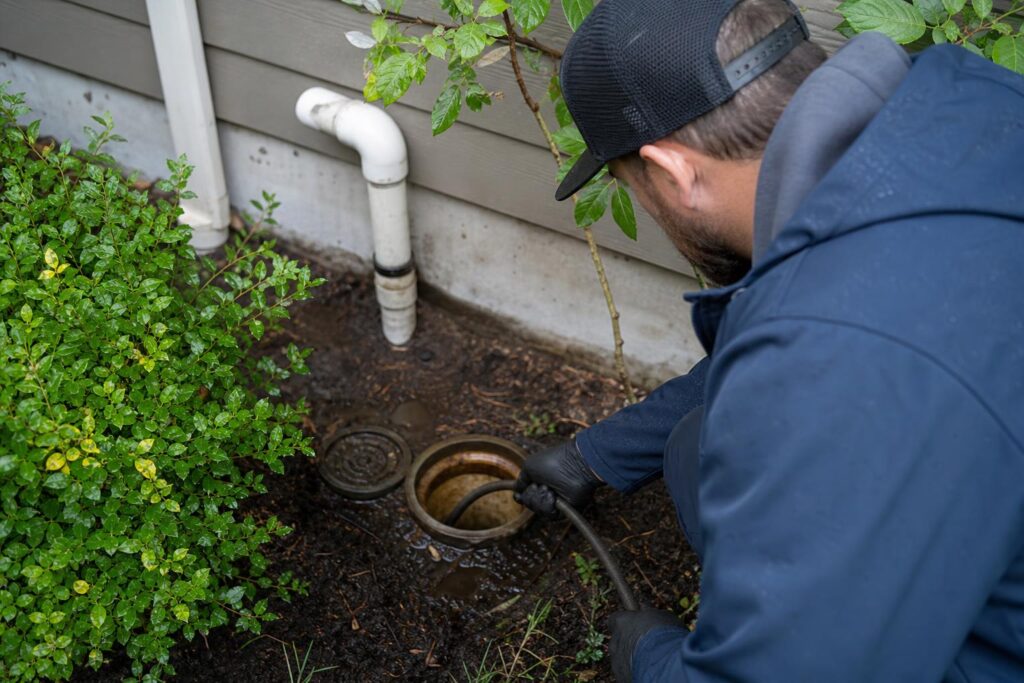
Early Signs of a Sewer Line Backup in Tigard Homes
The earliest signs of a sewer line backup are usually small and easy to ignore: more than one drain running slow at the same time, a toilet that gurgles when the washing machine or tub empties, and a faint sewage smell near floor drains or outside cleanouts. If you notice two or more of those together, the problem is likely in the main sewer line — not in a single fixture — and it will get worse, not better.
Tigard homes sit on a mix of older and newer sewer laterals, with mature trees, clay soil and a long wet season working against them. That combination is why a line can stay "fine" for years and then back up on the first heavy-use weekend of fall. Below is how to read the warning signs early, what causes them, and what an actual repair looks like.
The early warning signs, in the order most homeowners notice them
Sewer line trouble almost never starts with water on the floor. It starts with small changes in how your plumbing behaves.
- Multiple slow drains at once. One slow sink is a fixture clog. A slow tub, a slow shower and a slow kitchen sink in the same week point to the main line.
- Gurgling sounds. Air is trapped behind a partial blockage. You'll hear it in the toilet when the tub drains, or in the shower when the washer discharges.
- Toilets that bubble or drop in water level. The water level in the bowl rises and falls on its own as air moves past a restriction downstream.
- Water backing into the wrong place. Tub fills when the toilet flushes. Washing machine drains into the shower. This is a strong main-line signal.
- Sewage odor indoors or near the yard cleanout. A properly working system is sealed. A smell means waste is sitting somewhere it shouldn't.
- Lowest fixtures affected first. Basement drains, first-floor bathrooms and floor drains back up before upstairs fixtures.
- A soggy or unusually green patch in the yard. A cracked lateral leaks nutrients into the soil. The grass above it grows faster.
- Backups that return every few weeks. If a drain clears and then re-clogs on a schedule, something structural is holding debris — roots, a belly in the pipe, or a joint failure.
Fixture clog or main sewer line? A quick way to tell
Run water in a bathroom sink for a minute, then flush the toilet in that same bathroom.
- If only that one fixture misbehaves, you're likely dealing with a localized clog.
- If flushing the toilet makes the tub gurgle, or running the washer backs water into a shower, the restriction is downstream in the main line.
- If the problem shows up in more than one room, stop using water and have the line inspected before running anything else through it.
Why Tigard sewer lines back up
Knowing the cause matters, because it changes the repair.
Tree roots. Roots find the small gaps at pipe joints and grow toward the moisture. They start as a hairline intrusion that catches paper and grease, then build into a mat that blocks flow.
Grease and buildup. Cooking grease cools and hardens along the pipe wall. The pipe narrows from the inside until a normal load of laundry or a holiday dinner's worth of dishes pushes it over the limit.
Older pipe material and settling. Older laterals can crack, separate at joints, or develop a low spot ("belly") where waste collects instead of flowing through.
Heavy seasonal rain. Wet ground shifts soil and raises groundwater. A cracked line that drained acceptably in August can fail in November.
Flushed items that don't break down. Wipes labeled flushable, paper towels and hygiene products are the most common objects we pull out of residential laterals.
What to do the moment you spot the signs
1. Stop adding water. No laundry, no dishwasher, no long showers. Every gallon has to go somewhere.
2. Don't keep flushing. Repeat flushing on a blocked line is how a slow drain becomes a flooded floor.
3. Skip the chemical drain opener. It rarely clears a root mass or a structural problem, and it leaves caustic liquid sitting in the line for whoever opens it next.
4. Check your cleanout. If you can locate the exterior cleanout and water is standing in it, the blockage is in the main line.
5. Get the line inspected. A camera inspection shows the actual cause and location instead of guessing.
How a sewer line problem gets diagnosed and fixed
Sewer camera inspection
A camera is sent down the line to find exactly what's happening and where — roots, a crack, a belly, a foreign object. This is the step that decides whether you need a cleaning or a repair. It also prevents paying for the wrong fix.
Drain cleaning and hydro jetting
For buildup, grease and lighter root intrusion, drain cleaning restores flow. Hydro jetting goes further — high-pressure water scours the inside wall of the pipe rather than just punching a hole through the blockage. If your line re-clogs on a cycle, jetting is usually the difference between a temporary fix and a real one.
Trenchless sewer repair
When the pipe itself has failed, trenchless repair options can restore the line without excavating the full length of your yard or driveway.
Full sewer line replacement
If the lateral is collapsed, badly bellied or beyond repair, a full sewer line replacement is the honest answer. We'll tell you which of these you're looking at before any work starts, with the price in hand.
Does Einstein Pros serve Tigard?
Yes. Tigard is part of our Oregon Metro service area, alongside Portland, Beaverton, Hillsboro, Tualatin, Lake Oswego, Gresham, Salem and Albany. In the Portland metro area and Washington we provide plumbing services only — heating and cooling is available exclusively in Central Oregon.
Call our Portland line at (503) 821-4070, or send a request through the schedule a job estimate page. We aim to respond to online requests quickly — often within minutes during business hours. Office hours are Monday to Friday, 7:30 a.m. to 4:30 p.m., except holidays. Same-day or next-day service is available in many cases, depending on availability and urgency, and emergency plumbing service is available across the Portland area.
What to expect on every job: clear scheduling confirmation, licensed and insured technicians, upfront flat-rate pricing before work begins, clean job sites, and transparent communication.
Common follow-up questions
Can a sewer backup affect my water heater?
The two are separate systems, but they tend to surface at the same time of year. Cooler weather means longer showers, more hot water use and heavier laundry loads — which puts more volume through a weakening sewer line and more demand on an aging water heater. If a technician is already at your home for a drain or sewer call, it's worth having the water heater looked at in the same visit.
How do I know if my water heater is also struggling?
Watch for hot water that runs out faster than it used to, rumbling or popping from the tank, rusty hot water, or moisture around the base. We service, repair and install both traditional and tankless water heaters.
How much will the repair cost?
We provide upfront flat-rate pricing before any work begins, so you approve the number before a tool comes out. Financing may be available for qualifying projects — ask the team about details and approval requirements.
Should I wait and see if it clears on its own?
No. Partial blockages don't resolve themselves. A line that gurgles today is a line that backs up during the next heavy-use day, and cleanup costs far more than an inspection.
Your next step
If your Tigard home is showing two or more of the early signs — slow drains in multiple rooms, gurgling toilets, odors near a cleanout — have the line inspected before it backs up.
And while a technician is on site this season, ask about 5% off qualifying water heater service. It's a straightforward way to handle both systems before winter demand peaks.
Call (503) 821-4070 or request service online to book your sewer inspection and water heater check.