
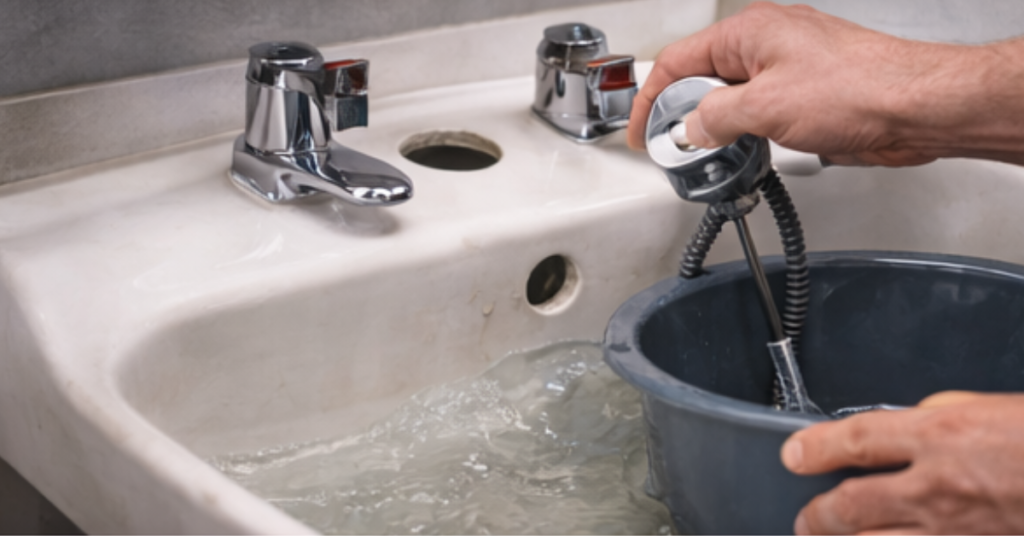
A clogged drain is one of the most common household plumbing issues, and it often tempts homeowners to try quick fixes. But many “fast solutions” actually make the problem worse, leading to expensive repairs, pipe damage, or recurring blockages.
Understanding what not to do is just as important as knowing how to fix a clog. Below are the most common mistakes homeowners make—and what you should do instead to protect your plumbing system.
Homeowners in Central Oregon can rely on Einstein Pros Central Oregon Plumbing for accurate diagnosis and long-term solutions. Their team can identify whether the issue is a localized blockage or a larger system concern and provide safe, effective repair options.
1. Don’t Overuse Chemical Drain Cleaners
One of the biggest mistakes homeowners make is repeatedly pouring chemical drain cleaners down a clogged drain. While these products may temporarily clear minor blockages, they often cause long-term damage.
Harsh chemicals can corrode older pipes, weaken seals, and create heat reactions that worsen buildup. Over time, this leads to leaks or full pipe replacement.
According to the U.S. Environmental Protection Agency, safer maintenance methods are preferred to protect both plumbing systems and water quality.
Instead of chemicals, mechanical removal or professional-grade solutions are much safer.
2. Don’t Ignore Slow Drains
A slow drain is not a minor inconvenience—it is an early warning sign of a developing blockage. Many homeowners wait until the drain is completely clogged before taking action, which makes the issue harder and more expensive to resolve.
Grease buildup, soap residue, and hair accumulation often start small but grow over time. Addressing the issue early can prevent full pipe obstruction.
3. Don’t Use Random Household Tools
It might be tempting to use wire hangers, sticks, or improvised tools to “fish out” a clog. However, this can scratch pipes, push the blockage deeper, or break the obstruction into harder-to-remove pieces.
Modern plumbing systems are designed with smooth interiors that can be easily damaged by sharp or rigid objects. Using improper tools often leads to more costly repairs than the original clog.
4. Don’t Pour Grease or Oil Down the Drain
Cooking grease is one of the leading causes of household drain clogs. When hot grease is poured down the sink, it eventually cools and hardens inside the pipes, creating thick blockages.
Even small amounts accumulate over time and combine with food particles, forming stubborn obstructions that restrict water flow.
Proper disposal of grease in a sealed container is always recommended.
5. Don’t Rely on Boiling Water Alone for Severe Clogs
Boiling water can help loosen minor soap or grease buildup, but it is not a solution for deeper or more solid blockages. In some cases, boiling water can damage PVC pipes or loosen pipe joints if used excessively.
For recurring or complete blockages, stronger mechanical methods are required rather than heat-based DIY fixes.
6. Don’t Ignore Recurring Clogs
If a drain keeps clogging repeatedly, it is a sign of a deeper plumbing issue such as:
- Pipe misalignment
- Tree root intrusion
- Deep sewer line buildup
- Ventilation issues in the drainage system
Ignoring recurring clogs allows the underlying issue to worsen, eventually leading to backups or pipe damage.
7. Don’t Assume Plunging Always Fixes the Problem
A plunger can be effective for simple sink or toilet clogs, but it is not a universal solution. If used incorrectly or repeatedly on deeper blockages, it may only temporarily shift the obstruction without removing it.
In more complex cases, the clog may be located further down the system where plunging has no effect.
What You Should Do Instead
Instead of relying on risky DIY methods, homeowners should focus on prevention and early intervention:
- Flush drains regularly with warm water (not boiling for all systems)
- Use drain strainers to catch debris
- Dispose of grease and oils properly
- Address slow drains before they worsen
- Schedule inspection if clogs recur
For persistent or severe drain issues, professional evaluation ensures the problem is fully resolved rather than temporarily masked.
When to Call a Professional
If you are dealing with repeated clogs, slow drainage throughout multiple fixtures, or backups, it’s time to get expert help. These symptoms often indicate deeper system issues that DIY methods cannot resolve safely.
Homeowners in Central Oregon can rely on Einstein Pros Central Oregon Plumbing for accurate diagnosis and long-term solutions. Their team can identify whether the issue is a localized blockage or a larger system concern and provide safe, effective repair options.
Learn more here:
https://einsteinpros.com/central-oregon-plumbing
Final Thoughts
Clogged drains are common, but most costly plumbing problems start when homeowners try quick fixes that make the issue worse. Avoiding chemical overuse, improper tools, and delayed action can save significant repair costs and protect your plumbing system long-term.
When in doubt, addressing the issue early—or seeking expert help—prevents small clogs from turning into major plumbing failures.
Sources & References
https://www.epa.gov/watersense
https://www.consumerreports.org/home-garden/plumbing/
https://einsteinpros.com/central-oregon-plumbing